Key takeaways:
-
Real marble is a natural stone with unique veining in every slab, while marble-effect tiles are porcelain printed to copy that look, so no two marble slabs are identical, but every marble-effect tile matches exactly.
-
Marble-effect porcelain is non-porous and far more resistant to bathroom moisture, while natural marble needs sealing and periodic resealing to avoid staining.
-
Marble-effect tiles cost noticeably less than genuine marble and involve simpler, faster installation.
-
Genuine marble carries a natural prestige that a printed surface can't fully replicate, which matters if resale value or a period property is part of the decision.
Marble has been a byword for luxury bathrooms for centuries, but that classic veined look now comes in two very different products: real stone and printed porcelain. This guide compares how each performs in a bathroom, what they cost to maintain, and which one actually suits your renovation. We'll also cover the practical differences that don't show up in a showroom, like sealing, porosity and long-term wear.
What's the Difference Between Marble and Marble-Effect Tiles?
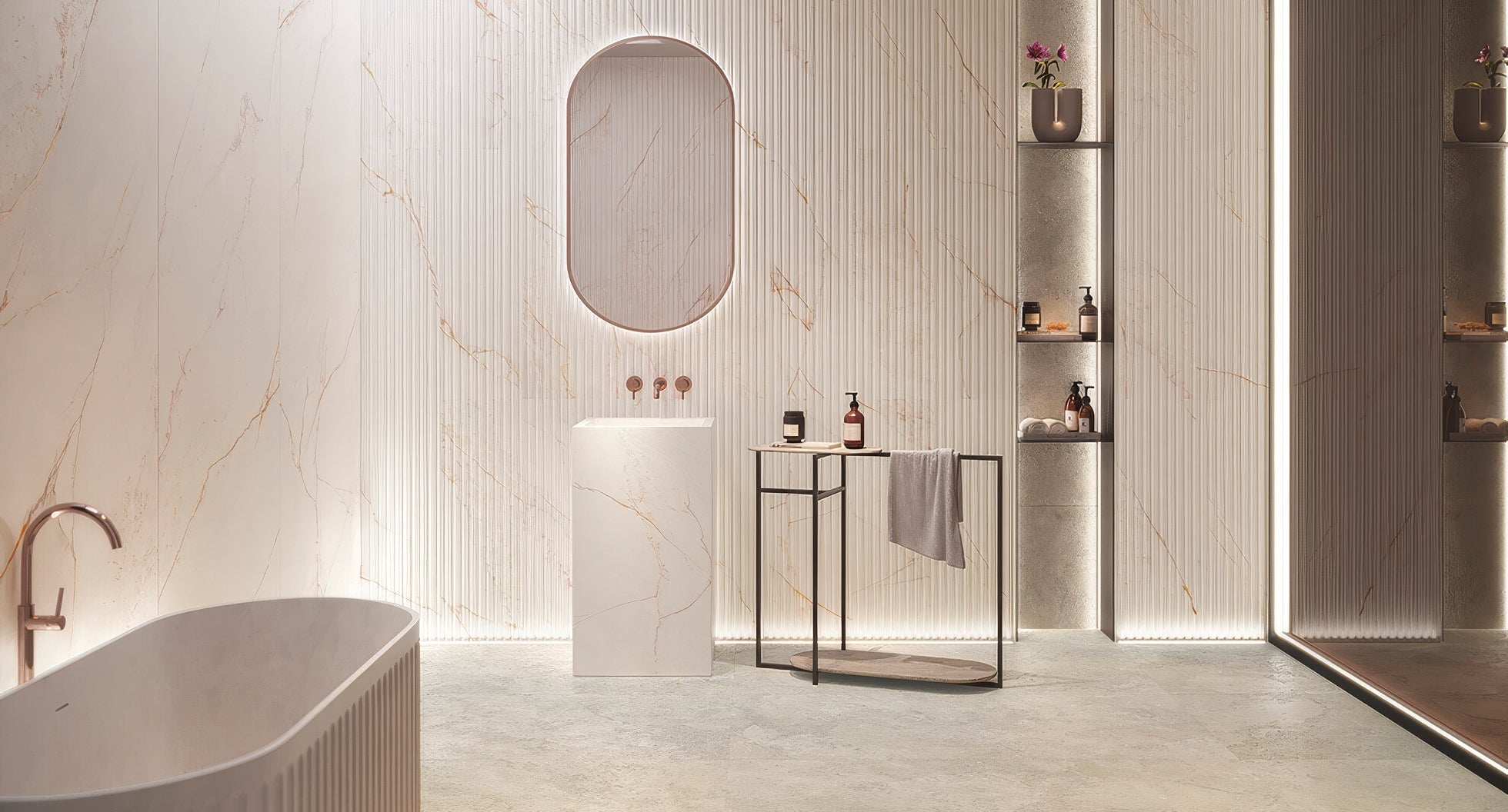
Genuine marble is a natural stone cut from quarried blocks, so its veining, colour variation and texture are unique to each slab, while marble-effect tiles are porcelain printed with a high-resolution marble pattern.
-
Real marble: natural stone, porous, unique veining on every piece, needs sealing before and after installation.
-
Marble-effect porcelain: manufactured, non-porous, a repeatable printed pattern, no sealing required.
Which Is More Durable in a Bathroom, Marble or Marble-Effect?
Marble-effect porcelain is the more durable choice for a bathroom, since it's non-porous, resists scratching well, and doesn't etch when acidic products touch it.
-
Water absorption: porcelain absorbs almost none, while marble is porous and needs sealing to resist water and staining.
-
Scratch resistance: Porcelain is highly resistant to scratching and everyday wear, generally outperforming natural marble in bathroom environments. porcelain's hard glazed surface resists scuffing better than the comparatively softer marble.
-
Chemical sensitivity: marble etches when acidic products like vinegar or lemon juice touch it; porcelain doesn't.
-
Humidity tolerance: porcelain handles constant bathroom moisture without the sealing marble depends on.
This gap matters most in a family bathroom, where spilled toothpaste, shampoo and everyday splashes are a daily reality rather than an occasional event. Marble copes fine with a sealed surface and reasonably prompt cleaning, but it's less forgiving of a household that doesn't keep up with either.
Does Marble-Effect Porcelain Look as Good as Real Marble?
High-resolution digital printing has closed the gap significantly, though a trained eye can usually still spot the repeat in a marble-effect pattern across a large floor.
The tell is rarely the surface itself. It's usually in the details print can't fully replicate.
-
Veining that doesn't wrap around the tile edge, since the pattern is printed flat rather than running through the material.
-
A visible pattern repeat every few tiles on a large floor, where real marble slabs never repeat exactly.
-
A completely flat surface on porcelain, versus the subtle depth and slight colour variation real marble has under raking light.
How Much More Maintenance Does Real Marble Need?
Real marble needs sealing when installed and resealing roughly every 12 to 18 months, plus care around acidic cleaning products that marble-effect porcelain doesn't require at all.
-
Reseal on a schedule: every 12 to 18 months for a bathroom floor, sooner if water stops beading on the surface.
-
Avoid acidic cleaners: vinegar and lemon-based products etch marble and leave a dull patch that won't buff out.
-
Dry water spots promptly: standing water is how marble stains, since it has time to soak into the porous surface.
-
Use a pH-neutral cleaner: the only cleaner type genuinely safe for marble regularly.
Which Costs More: Marble or Marble-Effect Tiles?
Genuine marble carries a higher price at every stage, from the tile itself through to installation, since it's heavier, harder to cut precisely, and often needs a specialist fitter.
-
Material cost: marble is priced well above marble-effect porcelain in almost every comparable finish.
-
Installation cost: cutting and levelling natural stone takes longer and usually needs a more experienced fitter.
-
Ongoing cost: sealant and specialist stone cleaning products add a recurring cost porcelain doesn't have.
Which Should You Choose for a Bathroom?
marble-effect tiles for a low-maintenance, budget-conscious bathroom that still wants the marble look, and genuine marble where authenticity and long-term value matter more than upkeep.
|
Factor |
Real Marble |
Marble-Effect Porcelain |
|
Porosity |
Porous, needs sealing |
Non-porous, no sealing needed |
|
Maintenance |
Reseal every 12-18 months, pH-neutral cleaners only |
Wipe clean, no special products required |
|
Cost |
Higher material and installation cost |
Lower cost, faster installation |
|
Uniqueness |
Every slab is genuinely unique |
Pattern repeats across tiles |
|
Best for |
Period properties, long-term value, low-traffic bathrooms |
Family bathrooms, rentals, budget renovations |
Both tiles deliver the same classic look, so the decision comes down to how much sealing and careful cleaning you're willing to commit to versus wanting a lower-maintenance floor that still reads as marble. If low maintenance matters more than owning genuine stone, marble-effect porcelain is the safer long-term choice for a bathroom.
Frequently Asked Questions
Can you use real marble in a shower?
Yes, but it needs a good seal and regular resealing, since a shower is one of the most consistently wet areas in the home and marble is porous.
Does marble-effect tile scratch easily?
No, porcelain's glazed surface resists scratching well, generally better than real marble, which is a comparatively softer stone.
Is marble-effect tile as slippery as real marble?
Slip resistance depends on the specific finish rather than whether it's real stone or porcelain, so check the R rating of the individual tile rather than assuming based on the material.
Can real marble and marble-effect tiles be mixed in the same bathroom?
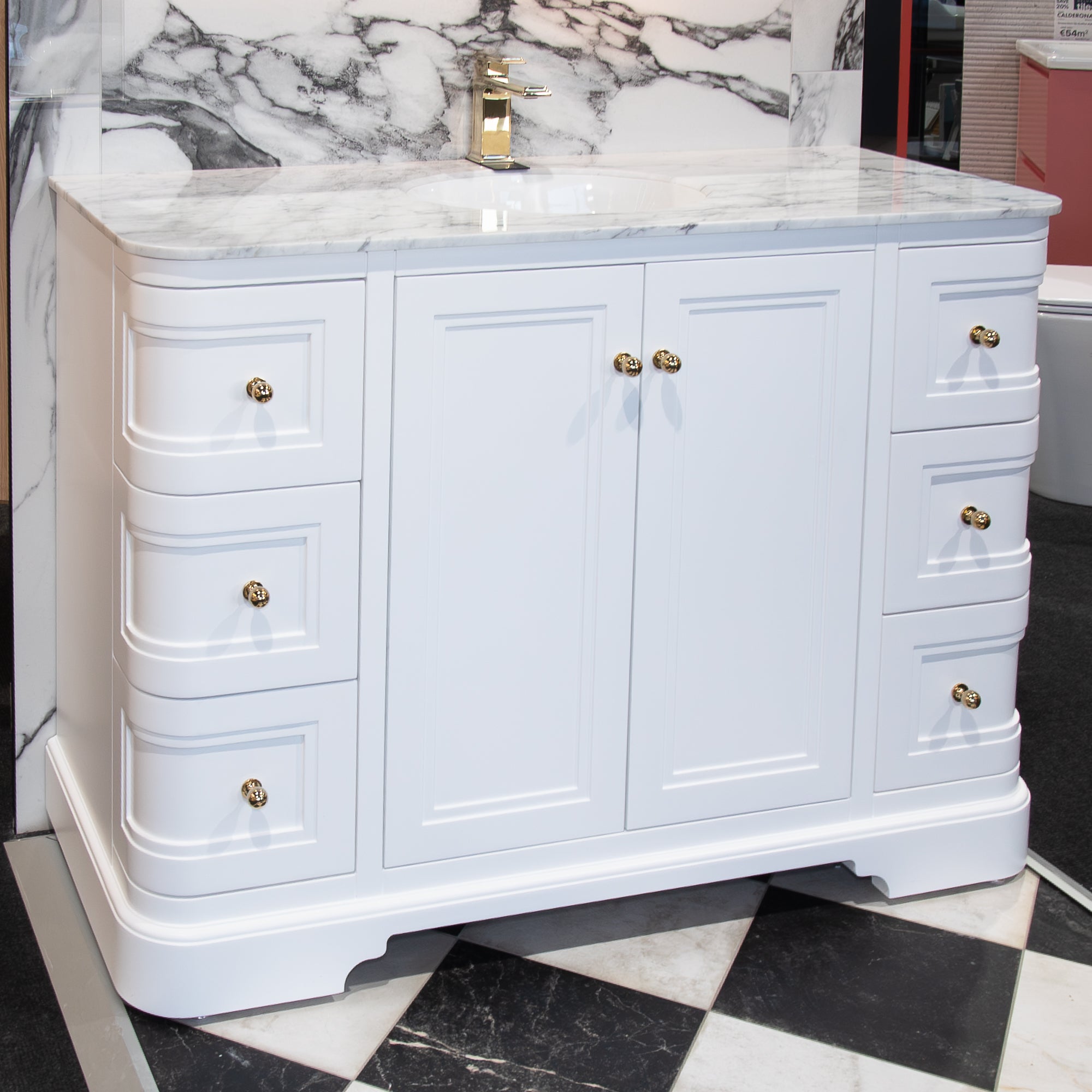
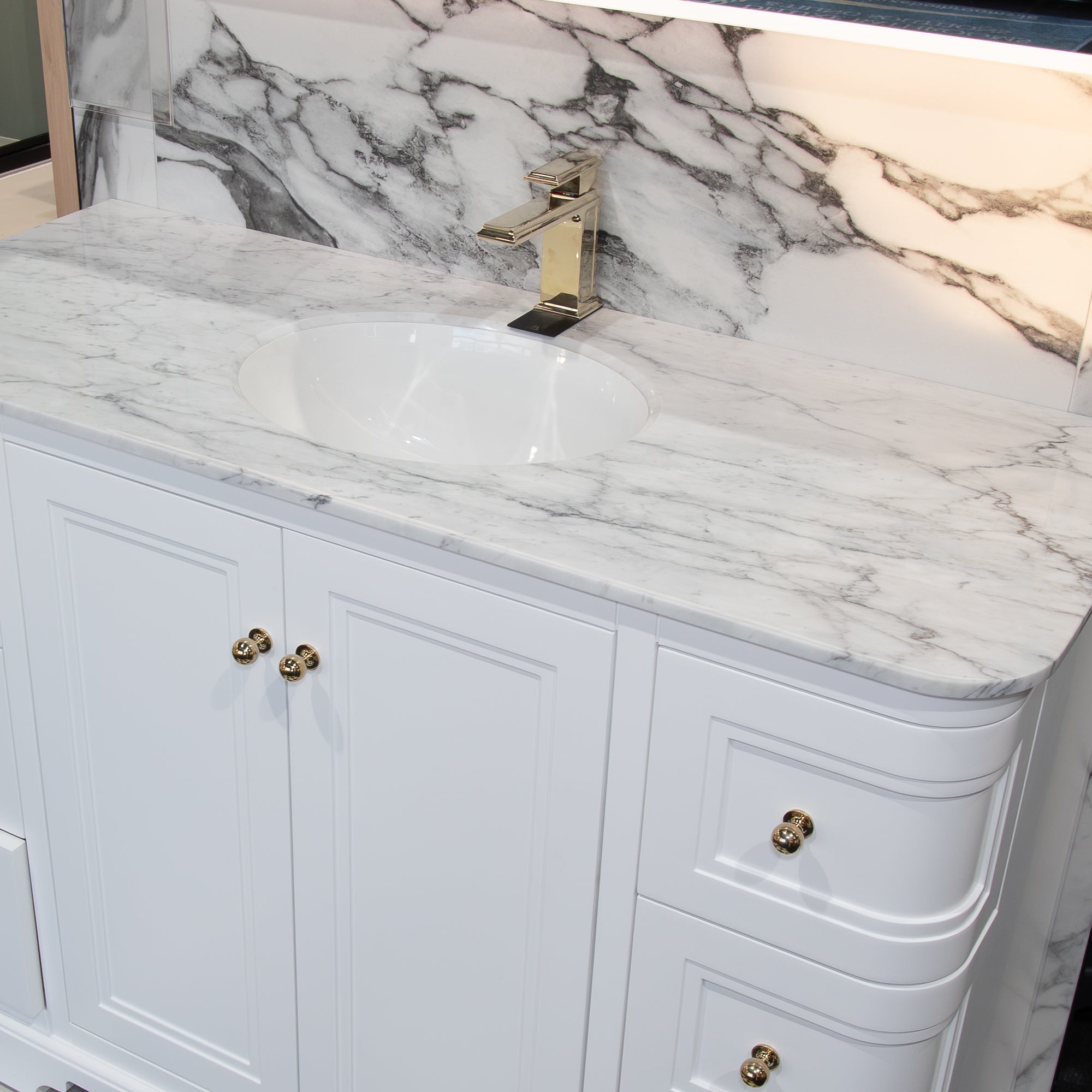
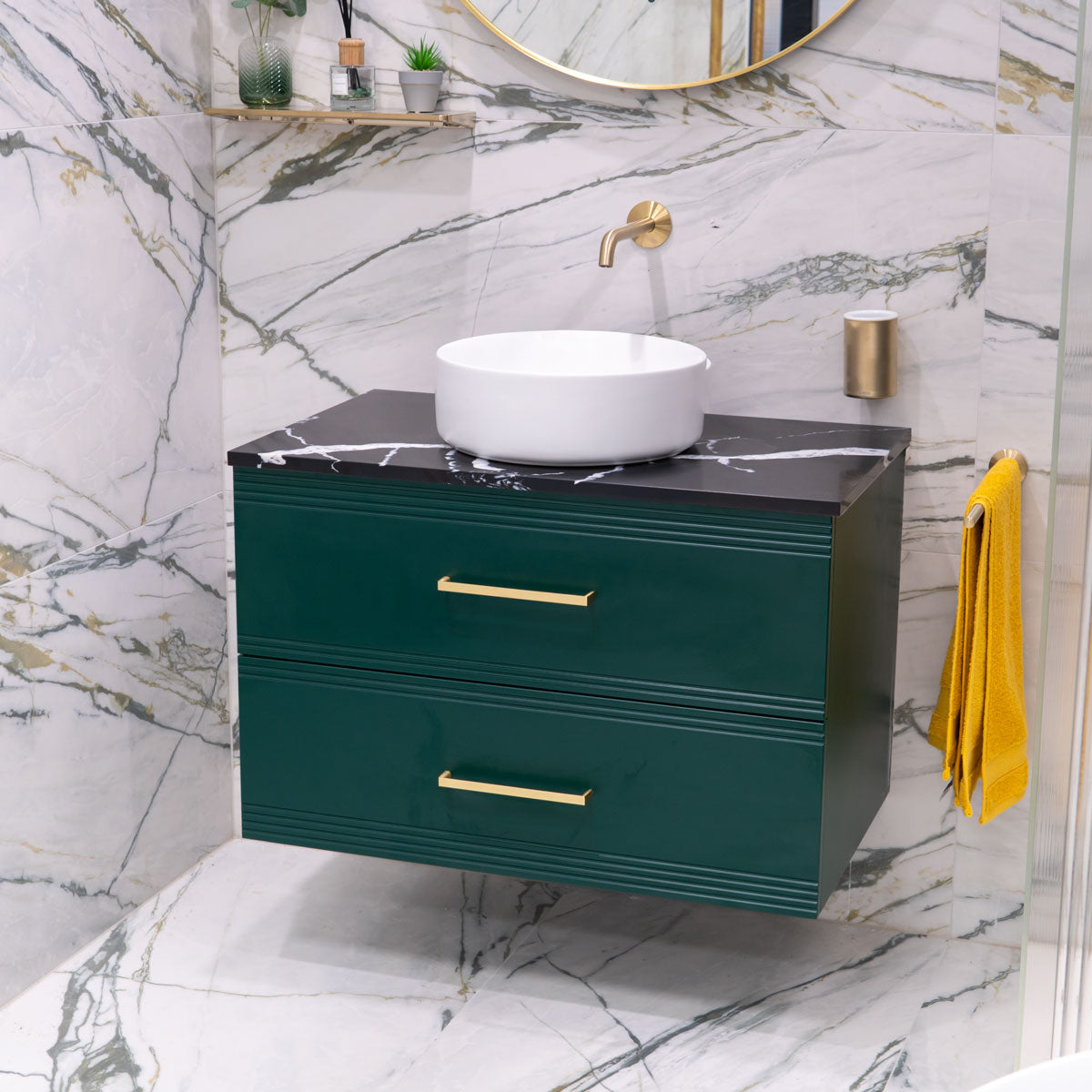
Yes, a common approach is a marble feature wall or vanity top paired with marble-effect flooring, which keeps the authentic material where it's seen most and the low-maintenance option underfoot.
Does marble-effect tile work with underfloor heating?
Yes, porcelain conducts heat well and is a standard choice for underfloor heating. Marble also works with underfloor heating, though it needs a compatible adhesive and should heat up gradually rather than in sudden bursts to avoid stress cracks.
Which feels warmer underfoot?
Both marble and marble-effect porcelain naturally feel cool to the touch because they conduct heat efficiently. When paired with underfloor heating, however, both warm up quickly and provide a comfortable surface underfoot. Without underfloor heating, there's very little noticeable difference in warmth between the two materials.
Is marble suitable for family bathrooms?
Yes, but it requires more care than marble-effect porcelain. A busy family bathroom is more likely to experience frequent splashes, spills and regular cleaning, all of which can affect natural marble if it isn't properly sealed and maintained. For households looking for the elegance of marble with minimal upkeep, marble-effect porcelain is often the more practical choice.
Can damaged marble be repaired?
In many cases, yes. Minor scratches, chips and surface etching can often be repaired or polished by a professional stone restoration specialist, helping to restore the marble's original appearance. While repairs are possible, preventing damage through regular sealing and proper care is always the best approach.
Do marble-effect tiles fade over time?
High-quality porcelain marble-effect tiles are highly resistant to fading and are designed to retain their appearance for many years. In normal indoor bathroom environments, they won't fade from natural light or everyday use. Regular cleaning with suitable, non-abrasive products is usually all that's needed to keep them looking their best.
Are Italian marble-effect tiles better?
Many of the world's leading porcelain tile manufacturers are based in Italy, where decades of expertise and advanced manufacturing techniques have helped set the standard for premium ceramic design. Italian brands such as Florim are renowned for producing exceptionally realistic marble-effect tiles with high-definition graphics, multiple tile faces to minimise visible pattern repetition, and outstanding manufacturing quality. While there are excellent porcelain tiles produced around the world, Italian marble-effect porcelain is often regarded as one of the best choices for homeowners seeking a luxurious, authentic marble appearance.