Complete Guide to Outdoor Tiles Ireland
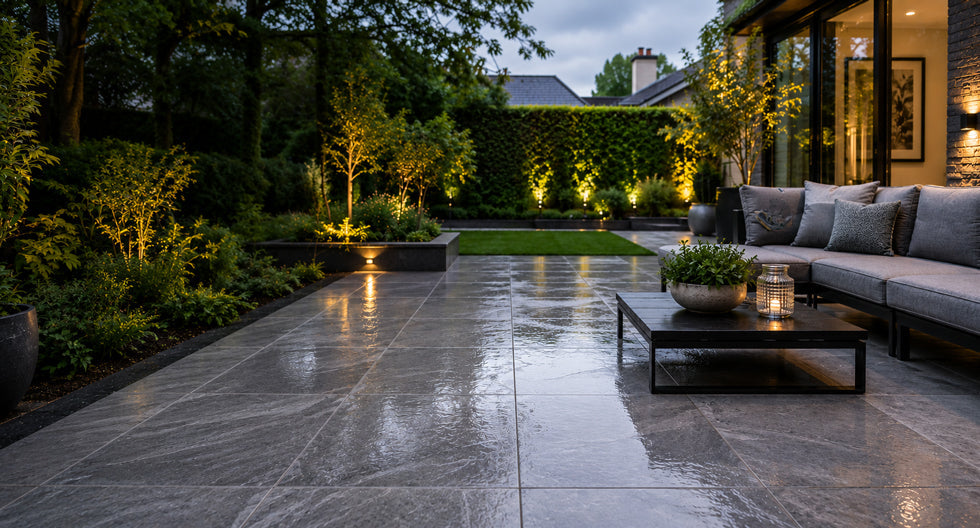
High-quality porcelain outdoor tiles are among the most durable and low-maintenance surfacing options for Irish gardens, provided you select vitrified porcelain with a thickness of 20mm and a certified R11 slip rating. Traditional timber decks rot in our damp climate, while many traditional concrete paving slabs absorb more moisture and are generally more susceptible to freeze-thaw damage.
Upgrading your garden patio with specialised external tiling creates a clean, weather-resistant space that will resist staining, retain colour well and provide excellent slip resistance when an appropriate textured finish is selected.
Key Takeaways
-
Porcelain outperforms concrete: Vitrified outdoor porcelain pavers absorb virtually zero water, making them highly frost resistant due to their extremely low water absorption and highly resistant to freeze-thaw damage.
-
Insist on an R11 slip resistance rating: For safe use during frequent Irish rain showers, always select non-slip outdoor tiles Ireland certified to provide adequate foot grip.
-
Always choose 20mm material thickness: Internal floor tiles are only 10mm thick and are more likely to crack or fail if used externally, whereas dedicated 20mm outdoor patio tiles handle heavy garden loads and shifting ground conditions.
-
Virtually maintenance-free: The solid structure stops green moss, lichen, and oil from sinking into the face, meaning it only requires basic washing to stay looking pristine.
-
Slurry priming is non-negotiable: Because external porcelain is dense and non-porous, it cannot stick to sand and cement without a backing primer.
Why Choose Outdoor Tiles for Your Patio?
Irish homeowners are rapidly moving away from traditional timber decking and natural sandstone paving slabs. Here is why non-porous tiling has become the standard for modern garden renovations.
Weather Resilience vs Timber and Stone
Wood decking requires annual pressure washing, sanding, and staining to prevent rot, yet it still tends to twist and degrade within ten years due to constant dampness. Natural sandstone looks beautiful initially, but its porous surface absorbs moisture, dirt, and organic matter. This leads to deep black tracking stains and aggressive green algae growth that takes hours of chemical scrubbing to clear.
Dedicated outdoor tiles greatly reduce these maintenance issues. The manufacturing process fuses clay and silica under massive pressure at temperatures over 1200 degrees Celsius, creating an extremely dense body with exceptionally low water absorption. Rainwater simply sheets off the surface rather than penetrating the body.
Low Maintenance Living
An external tiled area greatly reduces weed growth between joints. When laid correctly on a solid bed with commercial resin grout, there are no soil gaps for weeds to take root. Spillages from barbecue grease, red wine, or fallen autumn leaves wipe clean away without leaving a permanent shadow on your paving.
Technical Specifications: Thickness, Slips, and Sub-bases
To ensure your garden project survives the next twenty years, you must ignore indoor tiling rules. External environments introduce massive physical stresses from frost expansion and soil movement.
Thickness Requirements: 10mm vs 20mm
Standard 10mm indoor floor tiles lack the mass and impact resistance required for external use. They rely on a perfectly flat, solid concrete screed indoors. Outside, changes in temperature cause the ground to flex. Heavy patio planters or cast-iron garden furniture will snap a thin tile quickly.
True outdoor patio tiles use a double-thickness 20mm design. This extra depth gives them the necessary tensile strength to bridge minor ground flexing and bear heavy loads without risk of structural cracking.
Understanding Slip Ratings
Safety is the most critical consideration for any garden surface in Ireland. Tile slip resistance is measured using an 'R' rating system ranging from R9 up to R13:
-
R9 and R10: Smooth finishes meant for indoor dry areas like kitchens, lounges, and hallways. Never use these outside, as a drizzle will turn them into a serious slip hazard.
-
R11: The standard requirement for external patios. These feature a coarse surface texture that provides secure traction for footwear, even when completely saturated with rainwater.
-
R12 and R13: Heavy industrial surfaces meant for commercial ramps or public swimming pools.
For a family home, sourcing certified non-slip outdoor tiles tracking at R11 is the perfect balance between underfoot safety and ease of cleaning.
Exploring Style Variations for Irish Gardens
Investing in porcelain allows you to replicate premium natural textures with a remarkably realistic appearance, giving you high-end styling without the structural weaknesses of real timber or soft stone.
-
Stone effects: Replicates the rich veining and textured fossil markings of real slate, Portuguese limestone, or premium Irish blue limestone.
-
Concrete finishes: Offer clean lines and subtle tonal shifts that work perfectly with modern property extensions and minimalist garden designs.
-
Wood plank effects: Delivers the linear warmth of timber decking boards without the warping, splintering, or algae build-up that destroys natural wood.
If you are looking for design layouts or colour choices, take a look at our practical guide to transform your patio with outdoor tile ideas and inspiration.
Step-by-Step Guide: How to Fit Outdoor Tiles Correctly
Because porcelain outdoor tiles have extremely low water absorption, a priming slurry is required to achieve a reliable bond with the mortar bed. If you try to fit them like traditional concrete flags, they will detach within a single season.
The Solid Bed Installation Routine
Excavate and lay the hardcore base: Required depth: 100 mm to 150 mm.
Excavate and lay the hardcore base: Required depth: 100 mm to 150 mm. Dig down to a solid base and infill with compacted Clause 804 hardcore stone. Ensure you build a strict gradient slope of 1 in 80 running away from your house structure to guarantee that rainwater drains off efficiently.
Coat the back with a priming slurry: Prevents tiles from lifting later. Mix a premium polymer-modified priming slurry. Brush this thick cement layer over the entire underside of every single tile right before you place it down. This creates the essential chemical bond between the porcelain and the bed.
Set onto a full mortar bed: Avoid the dot-and-dab method. Lay the primed tiles into a full, wet 4-to-1 sand and cement mortar bed. Do not leave any hollow spaces or air pockets underneath the tile body. Hollows trap moisture, which expands during winter freeze-thaw cycles and cracks the floor layout.
Fill the gaps with external grout: Maintains structural spacing. Maintain a clean spacer joint width of 3 mm to 5 mm. Once the mortar cures, fill these joints using a flexible, water-resistant exterior paving jointing compound or a brush-in paving resin to prevent water ingress.
Movement joints: Large patios should include movement joints and perimeter expansion gaps around walls, steps and fixed structures. These allow the paving to accommodate seasonal expansion and contraction and reduce the risk of cracking or lifting.
Why Choose Rubber Tiles for Alternative Outdoor Areas?
While porcelain remains the premier choice for dining patios and garden walkways, specialised rubber options provide excellent utility in alternative domestic zones.
Soft Impact Protection
Dedicated outdoor rubber floor tiles are manufactured from high-density recycled rubber granules. They are designed explicitly to absorb impact shocks and dampen vibrations, making them an excellent choice for family spaces:
-
Children's play zones: Create a soft, forgiving impact base underneath climbing frames, swings, and slides to prevent injuries from falls.
-
Home garden gyms: Protect concrete bases from fracturing when dropping heavy dumbbells or barbells during outdoor training sessions.
-
Balconies and roof terraces: Provide a lightweight, comfortable surface to walk on without adding massive weight loads to old structural beams.
Why Buy Outdoor Tiles from Deluxe Bathrooms?
As a 100% Irish-owned company with two decades of experience helping homeowners across the country, we understand the exact structural standards required to build a patio that lasts.
-
Specially curated collections: Every tile we supply is fully vitrified and highly frost resistant, specifically picked to survive typical Irish weather conditions.
-
Certified slip security: We stock premium R11 textured surfaces to keep your garden walkways completely safe throughout the rainy winter months.
-
Nationwide showroom support: Our fully stocked physical locations let you see our products in person and speak to our experienced flooring specialists.
-
Secure pallet delivery: We handle fast, reliable transportation of heavy tiling products right to your home or job site anywhere in the country.
FAQs Outdoor Tiles Ireland
Where can I buy premium outdoor tiles in Ireland?
You can buy our full range online with secure pallet delivery right to your door, or visit our physical showrooms to inspect the quality in person. For customers based in Munster, our Cork bathroom tile store displays our complete selection of 20mm frost-proof garden pavers. If you are located in the northeast of the country, you can visit our fully stocked Dundalk bathroom tile store to explore finishes, sizes, and installation accessories.
Are outdoor tiles Ireland products frost-proof?
Vitrified porcelain tiles are highly frost resistant. True porcelain features a water absorption rate of less than 0.5%. Because it absorbs virtually zero dampness from rainfall, there is no moisture trapped inside the tile body to freeze, expand, and crack the surface during a cold Irish winter night.
What is the minimum joint width required for outdoor patio tiles?
We recommend maintaining a minimum joint width of 3 mm to 5 mm when installing external tiles. You should never butt-joint external tiles completely together. The spacer gap is required to handle the natural thermal expansion and contraction that occurs as the paving surfaces heat up in direct summer sun and cool down during the night.
Can I install standard indoor porcelain tiles outside?
No, we strongly advise against using normal indoor tiles outdoors. Indoor variants are only 10mm thick, meaning they lack the structural mass to bridge ground variations or support heavy outdoor garden furniture. Furthermore, indoor options carry a smooth R9 or R10 glaze that turns dangerously slick when exposed to rain, whereas dedicated outdoor variants feature a rough R11 texture for solid foot traction.
Why do I need to use a priming slurry on the back of external porcelain tiles?
You must use a priming slurry because vitrified porcelain is completely non-porous. Unlike old concrete flags or natural sandstone, porcelain will not absorb any water from standard wet mortar to create a mechanical grip. The polymer priming slurry acts as a specialised chemical glue, permanently bonding the back of the tile to your sand and cement sub-base.
How do you clean algae off non-slip outdoor tiles in Ireland?
Cleaning porcelain is exceptionally straightforward because moss and green algae cannot penetrate the dense, glassy surface. You can quickly wash away winter grime using warm water, a mild household detergent, and a stiff brush. Alternatively, you can use a domestic pressure washer, keeping the nozzle spray at a reasonable angle to avoid gouging out the jointing grout.
How long do porcelain patios last?
25 to 50+ years when correctly installed.