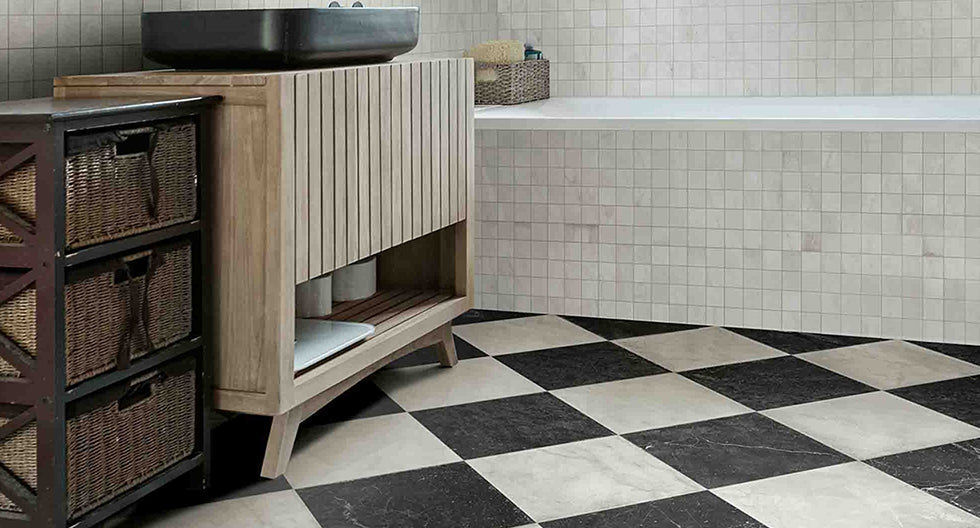
Checkerboard tile patterns use alternating square tiles of two contrasting colours to create a timeless, balanced geometric floor or wall. While black and white remains the traditional choice, modern Irish homes now lean towards muted stone pairs, earthy terracottas, and diagonal layouts that alter how spacious a room feels.
Key Takeaways
- Diagonal layouts make compact bathrooms and en-suites look wider by drawing the eye to the widest points of the room.
- Soft contrasts like tumbled limestone paired with marble, or olive paired with off-white, feel much warmer than high-contrast stark black and white.
- Matt and anti-slip porcelain tiles with an R10 or R11 rating provide the best safety and water resistance for wet room floors.
- Ordering an extra 15% to 20% in tile quantities is essential for diagonal checkerboard installations due to increased corner cuts.
- Medium grey grout disguises everyday dirt and soapy residue far better than pure white grout lines.
The Timeless Appeal of the Checkerboard Tile
A checkerboard pattern is one of the oldest decorative floor layouts in architecture, dating back to ancient Egyptian temples and grand Renaissance palaces. In Ireland, you will spot classic black and white Victorian checkerboard tiles in the entryways and hallways of period homes across Dublin, Cork, and Galway.
The enduring popularity comes down to balance. The human eye loves symmetry. A chequered floor anchors a room, giving you an orderly framework to build upon. Whether you have a modern new build or a 1930s semi-detached renovation, this pattern works across almost every architectural style without feeling dated.
Popular Checkerboard Tile Styles and Materials
The material you select determines how your bathroom looks, how it feels underfoot, and how much maintenance it requires over its lifetime.
Porcelain Checkerboard Tiles
Porcelain is our top recommendation for Irish family bathrooms. It absorbs less than 0.5% water, which means it will not warp, stain, or take on moisture from shower spray. Porcelain tiles can also be manufactured with realistic stone veining, slate textures, or satin finishes. They are fully compatible with underfloor heating systems, which keep cold tile floors warm on frosty winter mornings.
Tumbled Marble and Natural Stone
Natural marble offers authentic variation that artificial materials cannot replicate. Carrara white paired with Marquina black or Bardiglio grey creates a softer, more organic finish. Natural stone is porous, however. You will need to seal stone tiles with a penetrating impregnator upon installation, and reseal them every 12 to 24 months to protect against shampoo oils and hard water marks.
Ceramic Tiles for Walls and Splashbacks
Ceramic is lighter and easier to cut than dense porcelain, making it ideal for bathroom splashbacks, shower enclosures, and half-height wall panelling. A small-format ceramic checkerboard splashback adds character behind a basin or vanity unit without adding excessive weight to plasterboard walls
|
Material |
Water Absorption |
Maintenance Level |
Recommended Bathroom Zone |
|
Glazed Porcelain |
Under 0.5% |
Very Low |
Floors, wet rooms, walk-in showers |
|
Honed Marble |
0.5% to 2% |
Moderate (needs sealing) |
Floors, vanity splashbacks |
|
Glazed Ceramic |
3% to 7% |
Low |
Feature walls, basin splashbacks |
|
Terracotta |
8% to 14% |
High (regular sealing) |
Dry floor areas, cloakrooms |
Choosing the Best Checkerboard Tile Colours
Black and white is iconic, but high contrast is not your only option. Subtle colour combinations create calm, spa-inspired spaces that feel relaxed and contemporary.
Soft Neutrals and Warm Stones
Pairing warm ivory with soft beige or dove grey creates a gentle, understated floor. This pairing keeps compact bathrooms feeling bright and airy while retaining the classic geometric pattern. If you love neutral timber vanities and brushed brass brassware, a creamy stone check pulls the entire scheme together.
Earthy Terracotta and Muted Greens
Terracotta paired with cream or sage green is a major trend in Irish interior design. It introduces an organic, rustic warmth that balances the clean white porcelain of baths and toilets. Forest green and creamy off-white also work brilliantly in downstairs guest toilets where you want to make a bold impression.
Classic Black and White
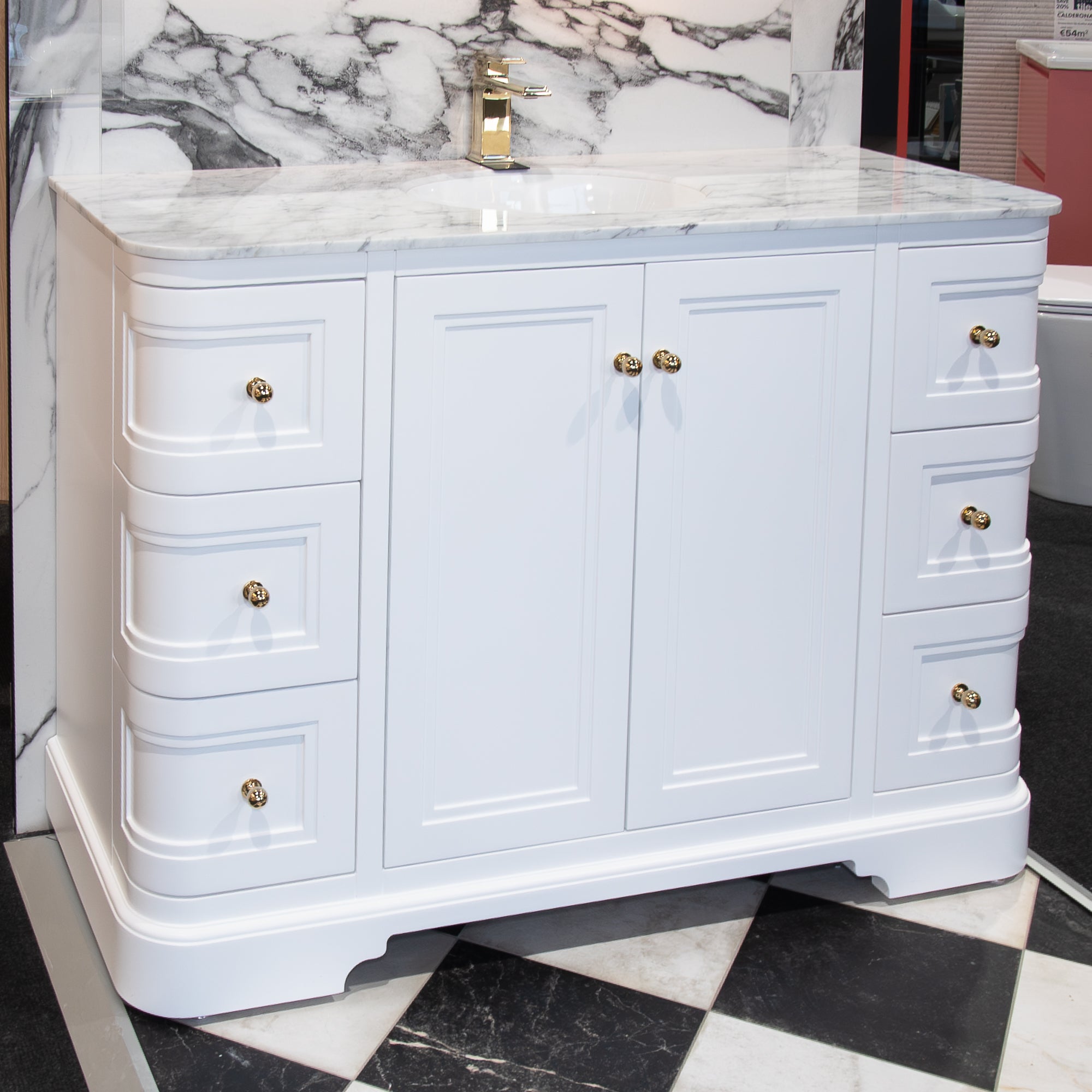
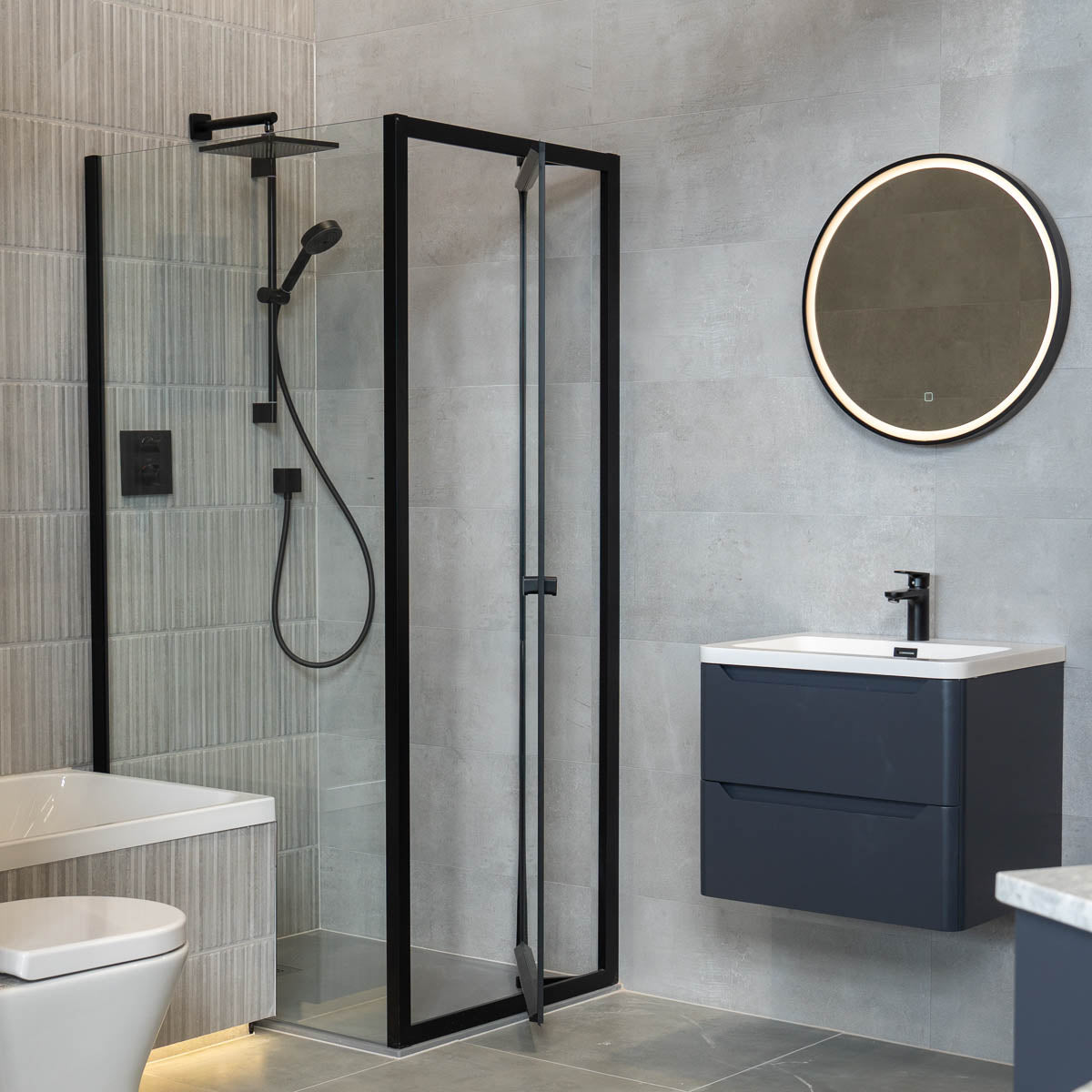
High-contrast monochrome delivers crisp, graphic energy. It suits industrial black frame shower screens, chrome taps, and minimalist freestanding baths. If you choose true black and white, opt for an off-black or charcoal rather than a glossy jet black. Deep charcoal hides water spots and dust much better than solid high-gloss black.
Straight vs Diagonal Layout: Which Should You Pick?
The way you lay your checkerboard tiles affects how your room's proportions are perceived.
The Straight (Square) Layout
In a straight layout, the edges of the tiles run parallel to the walls of the room.
- It produces a structured, clean-lined, modern look.
- Tile installation is faster because there are fewer complex diagonal cuts around skirting boards and pipework.
- Waste factor is lower, usually around 10%.
- It looks best in square or clearly rectangular rooms with straight walls.
The Diagonal (Diamond) Layout
Laying the tiles at a 45-degree angle turns the squares into diamonds.
- The diagonal lines trick the eye into seeing a wider space by pointing your gaze outward to the room's furthest corners.
- It works wonders in awkward spaces, narrow cloakrooms, and period properties where original walls are rarely square.
- Cutting tiles at 45 degrees along every wall edge produces more offcuts, requiring an ordering buffer of 15% to 20%.
Practical Design Tips for Checkerboard Bathroom Floors
Laying a checkerboard floor requires careful planning before any adhesive touches the screed. Here are practical rules from our two decades in bathroom renovations.
1. Scale the Tile Size to the Room
Tile dimensions dictate how busy the floor looks. In a small en-suite or guest WC, stick to 150x150mm or 200x200mm tiles. Larger 300x300mm or 400x400mm tiles work best in large family bathrooms where you have the floor space to see several pattern repeats. If you choose tiles that are too large for a small room, you may only see three or four full squares, losing the checkerboard effect completely.
2. Plan Your Dry Lay from the Centre
Never start tiling directly from one corner of the bathroom. Find the centre point of the floor and dry-lay your tiles outward towards the walls. This guarantees that the cut tiles around the perimeter of the room are identical in size on opposite sides. A balanced border makes the room feel orderly and professionally finished.
3. Pick the Right Grout Colour
White grout on a bathroom floor is tough to keep pristine, especially in busy homes or hard water areas. Charcoal grout over white tiles can also stain the white glaze during application if the tile surface is porous. A neutral mid-grey or silver-grey grout is the practical sweet spot. It defines the edges of both light and dark tiles cleanly while remaining easy to keep clean over time.
4. Factor in Wet Room Slip Resistance
Bathrooms get wet, and smooth, polished tiles turn slick quickly. For any shower area or family bathroom floor, look for porcelain tiles with a certified slip rating of R10 or R11. Matt or textured surfaces provide reliable grip underfoot without compromising the visual sharpness of the pattern.
Transform Your Bathroom with Deluxe Bathrooms
Planning a bathroom renovation requires the right balance of design, quality materials, and technical advice tailored to Irish homes. With two decades of experience designing and renovating bathrooms across Ireland, Deluxe Bathrooms supplies a curated collection of premium floor tiles, sanitaryware, and fixtures built for everyday living. Browse our full range of bathroom tiles online today, or get in touch with our specialist team for practical advice on layouts, quantities, and matching brassware for your project.
Frequently Asked Questions
Does a checkerboard tile floor make a bathroom look smaller?
A checkerboard floor does not make a room look smaller if you scale the tiles correctly. A diagonal layout actually makes compact bathrooms and narrow cloakrooms feel wider. The 45-degree diamond pattern draws your eye outward toward the walls rather than focusing straight ahead.
What size checkerboard tile is best for a small bathroom?
For a small bathroom or cloakroom, 150x150mm or 200x200mm tiles are ideal. This size allows for enough pattern repeats across the floor so the checkerboard layout is clearly readable without overwhelming the room.
Which grout colour works best with black and white checkerboard tiles?
A medium grey or silver-grey grout works best. Pure white grout discolours quickly on bathroom floors from foot traffic and water, while jet black grout can stain lighter tiles during installation. Mid-grey complements both shades and hides daily dirt.
Are checkerboard tiles out of style?
No, checkerboard tiles are a permanent design classic. While stark black and white trends rise and fall, the underlying pattern has remained popular for centuries. Modern renovations keep the look fresh by using natural stones, earthy colours, and soft, low-contrast palettes
Can you use checkerboard tiles with underfloor heating?
Yes, porcelain and natural stone checkerboard tiles conduct heat very efficiently, making them ideal for electric and hydronic underfloor heating systems. Always use an anti-fracture decoupling mat and flexible, heat-rated tile adhesive during installation.
How much extra tile should I order for a diagonal checkerboard pattern?
Order 15% to 20% extra tile over your measured floor area for a diagonal layout. Cutting tiles at a 45-degree angle along the perimeters creates significantly more offcut waste than a traditional straight layout.