Key takeaways:
- Clean bathroom floor tiles weekly with a pH-neutral cleaner, working into the grout lines and drying fully afterwards to stop mould taking hold.
- Natural stone tiles need a pH-neutral cleaner, not vinegar or lemon juice. Both will etch and dull the surface over time.
- Reseal grout every 6 to 12 months. It's the single biggest factor in whether grout stains again within weeks or stays clean for a year.
- A daily squeegee and a running extractor fan after every shower cut down how often you need to deep clean at all.
Bathroom tiles pick up soap scum, limescale and mould faster than almost any other surface in the house, and the wrong cleaner can do more damage than the grime itself. This guide covers the right method for floor tiles, wall tiles and grout, the tools that actually work, and the habits that keep the room looking new between cleans. Hard water areas make this worse, since limescale builds on top of soap scum and hides underneath it, so we've included what to use if that's the main problem. We've also flagged the common mistakes that wear tiles down long before they should.
What's the Best Way to Clean Bathroom Floor Tiles?
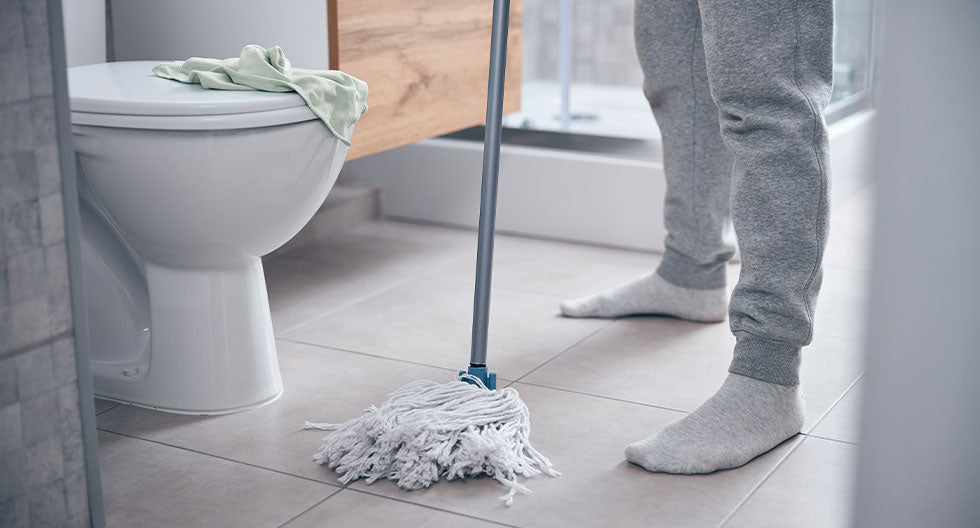
Sweep or vacuum first, then mop with a pH-neutral cleaner and warm water, working into the grout lines rather than just across the open tile.
The order matters more than most people think. Grit left on the floor acts like sandpaper under a wet mop, so clearing it first protects the glaze.
- Clear debris: Sweep or vacuum to remove grit before it scratches the surface.
- Mix your solution: Warm water with a few drops of pH-neutral cleaner, or a 50:50 vinegar and water mix for everyday grime.
- Mop with purpose: Work into corners and grout lines, not just the open tile.
- Spot-treat stains: A baking soda paste lifts stubborn marks without heavy scrubbing.
- Dry fully: A microfibre cloth stops streaks and stops water from sitting in the grout.
Avoid acidic or abrasive cleaners on natural stone floors. Vinegar and lemon juice etch the surface and leave it looking duller, not cleaner.
How Do You Clean Bathroom Wall Tiles?
Spray your cleaning solution from the top of the wall down, then wipe with a microfibre cloth before it dries into streaks.
Wall tiles don't take foot traffic, but they carry more soap scum and water spots than floors do, especially around the shower.
- Spray top to bottom: Gravity does some of the work, so start high.
- Let it sit: Give the solution 5 to 10 minutes on soap scum and water spots.
- Scrub gently: A soft brush or sponge lifts residue without scratching the glaze.
- Rinse and dry: Wipe with a clean, damp cloth, then buff dry.
Streaks usually come down to drying, not cleaning. Buff the tile dry straight away rather than letting it air-dry.
Does the Type of Tile Change How You Clean It?
Yes. Porcelain and ceramic tiles tolerate most household cleaners, but natural stone needs a pH-neutral product, or it will etch and dull over time.
|
Tile Type |
Safe to Use |
Avoid |
|---|---|---|
|
Porcelain and ceramic |
Mild detergent, tile-specific cleaner, occasional diluted vinegar |
Steel wool, abrasive powders |
|
Natural stone (marble, limestone, travertine) |
pH-neutral stone cleaner |
Vinegar, lemon juice, bleach, anything acidic |
|
Textured or anti-slip tiles |
Soft-bristled brush worked into the texture |
High-pressure jet washers, which can force water under the tile |
Grout colour matters here too. Light grout shows staining faster on any tile type, so a sealer applied at installation and reapplied on schedule saves far more work than trying to bleach it back to white later.
If you're replacing tiles that won't come clean no matter what you try, our premium tile range covers easier-to-maintain porcelain and ceramic options.
How Do You Clean Bathroom Tile Grout?
Scrub a baking soda and water paste into the grout lines with an old toothbrush, then rinse with diluted vinegar to lift what the paste has loosened.
Grout is porous, which is exactly why it stains faster than the tile around it.
- Apply the paste: Baking soda and water, worked directly into the grout lines.
- Scrub: An old toothbrush or stiff grout brush reaches narrow lines better than a cloth.
- Rinse with vinegar: Spray diluted vinegar over the paste and let it bubble before wiping away.
- Dry thoroughly: Damp grout is exactly where mould starts.
Reseal grout every 6 to 12 months with a grout sealer. It's what actually stops moisture and staining getting in between cleans, rather than just masking the problem after it's already there. Our tile adhesive and grout collection carries a protector for this.
How Do You Deep Clean Bathroom Tiles?
A deep clean goes further than the weekly wipe-down: it strips old product residue, gets into every grout line, and checks whether anything needs resealing.
- Strip product build-up: Some cleaners leave a residue that dulls tiles over time. A dedicated intensive cleaner, such as Lithofin KF Intensive Cleaner, clears this on porcelain and ceramic without the streaking a general household spray leaves behind.
- Treat every grout line, not just the visible ones: Mould often starts behind fixtures or in corners a weekly clean skips.
- Check the sealant: Reapply grout or stone sealer if it's been over a year since the last one. Lithofin KF Grout Protector works for this without leaving grout looking glossy or artificial.
- Tackle limescale separately: In hard water areas, limescale sits on top of soap scum and needs its own pass with a dedicated limescale remover rather than a general tile cleaner.
- Set a schedule: Aim for a deep clean monthly, with a full reseal every 6 to 12 months.
A monthly deep clean takes longer than the weekly routine, usually 45 minutes to an hour for a standard bathroom, but it's what actually resets the tiles rather than just refreshing the surface. Skipping it doesn't show up straight away. It shows up months later as grout that won't return to its original colour no matter how hard you scrub.
What Daily Habits Keep Bathroom Tiles Cleaner for Longer?
A quick squeegee after showering and a running extractor fan for 15 minutes afterwards prevent most of the build-up a deep clean has to undo.
- Squeegee shower walls and screens straight after use.
- Run the extractor fan, or open a window, for 15 to 20 minutes after every shower.
- Wipe down the floor with a dry cloth if water has pooled.
- Hang towels so they dry fully instead of holding moisture against the tile.
- Keep a small spray bottle of diluted vinegar for a 30-second refresh between deep cleans.
What Mistakes Make Bathroom Tiles Harder to Clean?
Bleach and abrasive scrubbers cause more long-term damage than the stains they're meant to fix, especially on grout and natural stone.
- Using bleach on grout: it can lighten grout unevenly and doesn't address the mould underneath.
- Scrubbing with abrasive pads: they scratch the glaze on ceramic and porcelain, giving grime more surface to cling to next time.
- Skipping the drying step: damp tiles and grout are how mould starts in the first place.
- Using acidic cleaners on stone: vinegar and lemon juice etch marble, limestone and travertine.
- Leaving cleaning product residue: rinsing thoroughly matters as much as the cleaning itself.
Start with a Few Daily Habits
Getting bathroom tiles properly clean comes down to matching the product to the tile type, working the grout as hard as the surface, and drying everything fully afterwards. A few daily habits, like a quick squeegee and a running extractor fan, cut down how often a deep clean is needed at all. If it's time to replace tiles that have never come properly clean, browse our bathroom tiles on offer here.
Frequently Asked Questions
How often should I reseal bathroom grout?
Every 6 to 12 months for most homes, or annually at minimum for natural stone. Reseal sooner if water stops beading on the surface, which is the clearest sign the sealer has worn off.
Does vinegar damage bathroom tiles?
It's safe on porcelain, ceramic and grout in normal dilution, but it damages natural stone. Vinegar is acidic enough to etch marble, limestone and travertine, leaving a dull patch that won't buff out.
Why do my bathroom tiles keep going mouldy?
Mould needs moisture, so tiles that don't dry fully after a shower will keep growing mould regardless of how often they're scrubbed. Running the extractor fan and squeegeeing the walls stops moisture sitting long enough for mould to take hold.
What's the best cleaner for hard water areas in Ireland?
A dedicated limescale remover used separately from your regular tile cleaner, since limescale sits on top of soap scum and general cleaners don't shift it on their own.