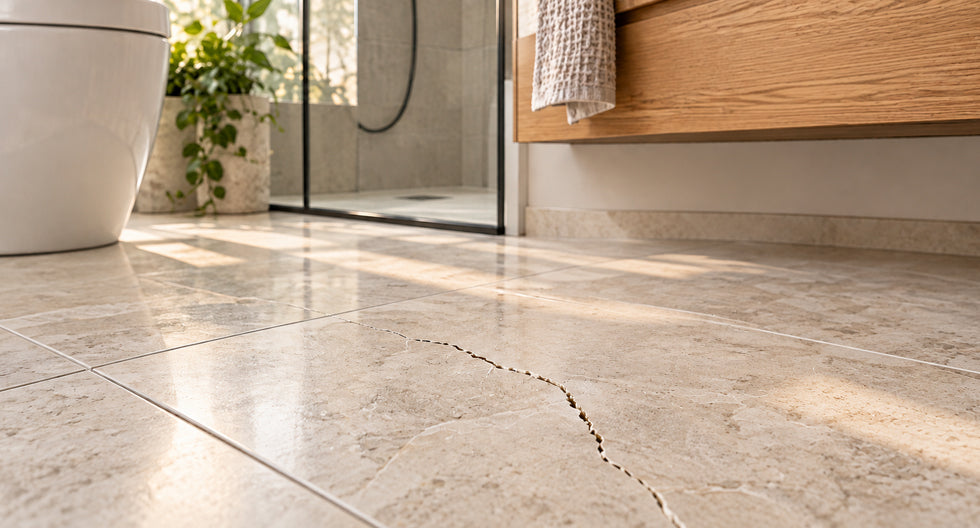
To fix a cracked bathroom tile, you must either fill minor hairline fractures with a colour-matched epoxy resin or, for more severe damage, remove the individual tile entirely and replace it with a new one.
Key Takeaways
- Minor vs. Major: Hairline cracks can often be camouflaged with epoxy, but structural cracks or "spiderwebbing" require full tile replacement.
- Root Cause Matters: Always investigate if a crack is due to a dropped object or underlying issues like a shifting subfloor or moisture ingress.
- Safety First: When removing ceramic or porcelain, wear eye protection and gloves to protect against sharp shards.
- Grout Matching: For a seamless finish, try to use the same grout brand and shade used during the original installation.
- Expert Finish: If more than three tiles are cracked in a single area, it may indicate a larger structural problem that requires professional inspection.
Why is My Bathroom Tile Cracking?
Before reaching for your tools, it is vital to understand why the damage occurred. If you simply replace a tile without addressing the cause, the new one will likely crack within months.
- Impact Damage: The most common cause. Dropping a heavy glass bottle or a metal tool can easily shatter ceramic surfaces.
- Subfloor Movement: In many homes, tiles laid on plywood or poorly braced timber joists flex. This lack of rigidity leads to wall tiles cracking in bathrooms or floor tiles snapping.
- Bathroom Tile Grout Cracking: If you notice the grout is crumbling alongside the crack, moisture may have seeped behind the tile, causing the adhesive to fail.
- Thermal Expansion: Rapid temperature changes from underfloor heating or hot showers can cause tiles to expand and contract. Without proper expansion gaps, they will eventually pressure-crack.
How to Fix a Cracked Bathroom Tile: A Step-by-Step Guide
If the damage is a single clean break or a small chip, you don't always need to rip it out. Here is how to handle the two most common repair scenarios.
Option 1: Repairing Hairline Cracks with Epoxy
For tiny fractures that are barely visible but could let in water, a repair kit is your best friend.
- Clean the Area: Use soapy water and a nail brush to scrub the crack. Ensure it is bone dry before proceeding.
- Mix the Resin: Use a two-part epoxy resin. You can add a drop of oil-based paint to match your tile colour precisely.
- Apply and Level: Use a toothpick or a small spatula to push the resin into the crack. Wipe away any excess immediately with a damp cloth.
- Seal: Once cured (usually 24 hours), the crack should be watertight and virtually invisible.
Option 2: Full Tile Replacement
If the tile is shattered, you will need to repair cracked tiles bathroom style by swapping them for spares.
- Remove the Old Grout: Use a grout rake or a multi-tool to carefully remove the grout surrounding the damaged tile. This "isolates" the tile so that when you hammer it, the vibrations don't crack the healthy tiles next to it.
- Break and Remove the Tile: Cover the cracked bathroom tile with a cloth to prevent shards from flying. Starting at the centre of the crack, use a hammer and a narrow masonry chisel to gently tap and pry up the pieces.
- Prep the Surface: You must scrape away the old, hardened adhesive from the wall or floor until the surface is flat. A lumpy substrate will cause the new tile to sit higher than the rest, creating a trip hazard.
- Back-Butter and Set: Apply a thin layer of tile adhesive to the back of the new tile (back-buttering) and press it firmly into place. Use spacers to ensure the lines are even.
- Regrout: Wait 24 hours for the adhesive to set. Apply fresh grout into the joints using a rubber float, wait 20 minutes, and then wipe the excess away with a damp sponge.
Dealing with Bathroom Tile Grout Cracking
Sometimes the tile is fine, but the grout is failing. This is common in "wet zones" like showers.
- The Fix: Rake out the old grout to a depth of at least 3mm.
- The Material: Use a flexible, anti-mould grout. In Ireland's humid climate, standard grout often fails; a polymer-modified version handles movement and moisture much better.
- The Seal: Once dry, apply a grout sealer to prevent future water absorption.
Ready for a Permanent Fix?
While a single cracked tile is often a straightforward DIY fix, recurring damage or widespread cracking is usually a sign that your bathroom substrate needs professional attention. At Deluxe Bathrooms, we have spent 20 years helping homeowners transition from stop-gap repairs to high-quality, durable bathroom installations that stand the test of time. If you're tired of patchy repairs and want a space built with professional-grade waterproofing and precision, we're here to help.
Frequently Asked Questions
Can I fix a cracked tile without replacing it?
Yes, for hairline cracks, you can use a colour-matched epoxy or a specialised tile repair kit. However, if the crack is wider than 1mm or the tile is loose, replacement is the only long-term solution.
Why are my wall tiles cracking in the bathroom?
Bathroom wall tiles usually crack due to "taping and jointing" issues in the plasterboard behind them or because the house is settling. If the cracks are diagonal across several tiles, it may be a sign of structural movement.
How much does it cost to repair cracked tiles in a bathroom?
A DIY repair kit costs between €15 and €30. If you hire a professional to replace a few tiles, expect to pay a call-out fee plus labour, typically ranging from €80 to €150, depending on the complexity.
What is the best adhesive for bathroom tile repairs?
Always use a waterproof, cement-based thin-set tile adhesive for bathrooms. Avoid "ready-mixed" tubs for floor tiles, as they don't provide the same strength as powdered adhesives that you mix yourself.
How do I match the colour of my old grout?
Grout fades over time. Take a small piece of the old grout to a dedicated bathroom showroom or hardware store. It is often better to go one shade lighter, as new grout usually dries slightly darker than the sample.
Can I tile over a cracked tile?
We do not recommend this. Tiling over a cracked tile adds weight and height to your floor or wall. More importantly, if the original tile cracked due to subfloor movement, the new layer will eventually crack in the exact same spot.
Is a cracked bathroom tile a leak risk?
Yes. Even a small crack allows water to seep into the substrate. Over time, this rots timber joists or causes mould growth behind the walls, leading to much more expensive repairs than a simple tile swap.