A heated towel rail is one of the most practical upgrades you can make to a bathroom. It keeps towels dry, adds background heat, and improves day-to-day comfort. This guide to buying bathroom heated towel rails covers how they work, what to buy, how to install them, and how to maintain them properly.
Key Takeaways
- A bathroom heated towel rail provides both towel drying and space heating.
- Electric models are the most flexible for UK homes and renovations.
- Size, output, and mounting type matter more than style alone.
- Correct installation and basic maintenance improve lifespan and efficiency.
What is a Bathroom Heated Towel Rail?
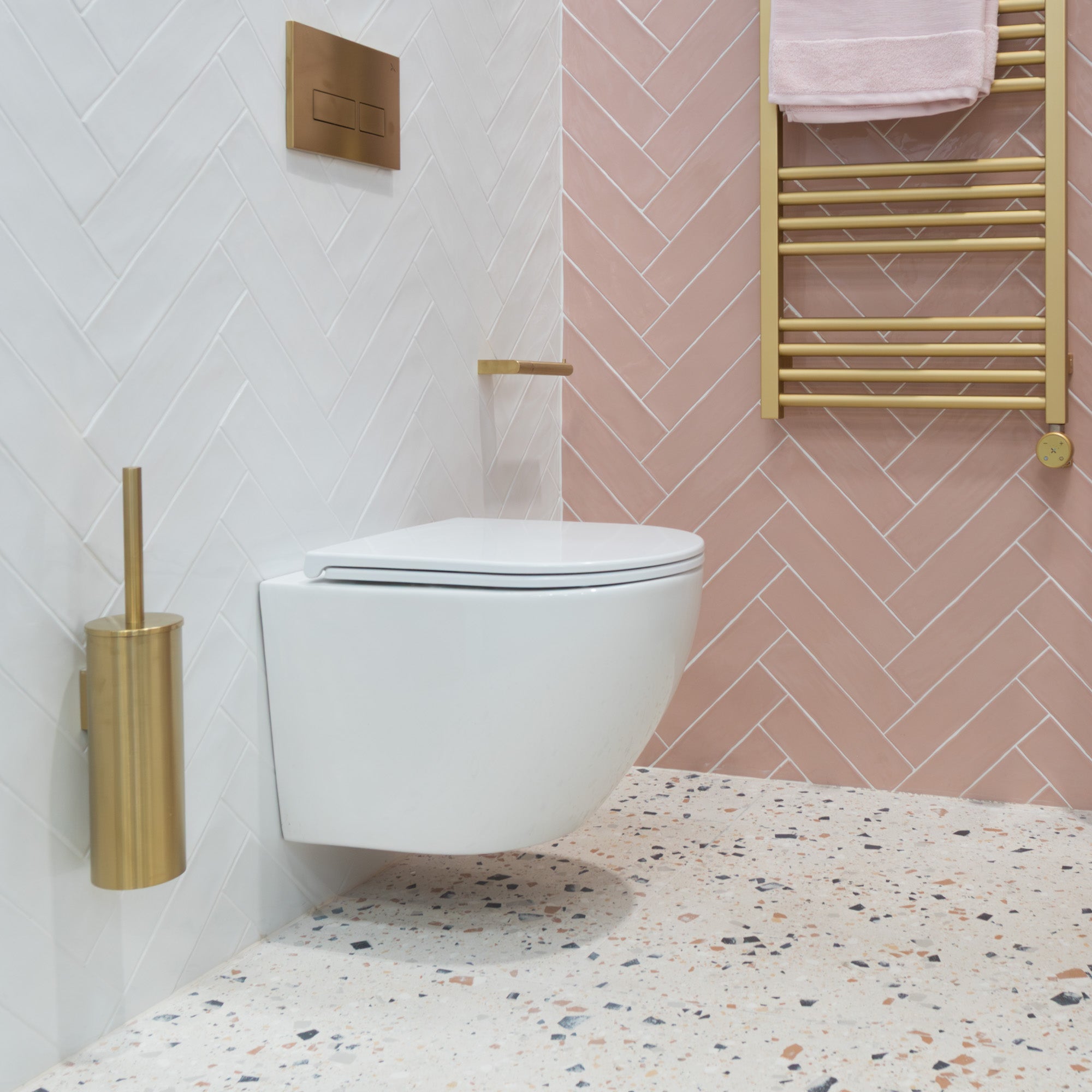
A bathroom heated towel rail is a heated unit designed to warm towels while also contributing to room heat. It replaces or supplements a standard radiator and is commonly installed near showers or baths.
Most models use a ladder-style design so towels can hang and dry evenly. In most homes, towel rails are often chosen for en-suites, family bathrooms, and cloakrooms where moisture build-up is an issue.
How Do Heated Towel Rails Work?
One of the most common questions buyers ask is how do heated towel rails work, as performance depends on the system used.
Electric Heated Towel Rails
Electric towel rails contain an internal heating element powered by electricity. Some are oil-filled, while others use dry elements, but both types heat the rail evenly and independently from your central heating. This allows towels to dry year-round, even when the boiler is off.
Central Heating Towel Rails
Central heating towel rails connect directly to your boiler and heat up when the heating system is running. They work well in winter but offer limited control and no heat during warmer months unless the boiler is on.
Dual Fuel Towel Rails
Dual fuel towel rails combine both systems, using central heating in winter and electricity in summer. They cost more upfront but suit homes that want flexibility without relying on one heat source.
Electric vs Central Heating Towel Rails
Why Electric Towel Rails Suit Most Bathrooms?
For renovations, electric options dominate. A wall-mounted electric heated towel rail avoids pipework changes and gives full control over usage times.
Benefits include:
- Simple installation in existing bathrooms.
- Lower disruption during refits.
- Reduced moisture and mould risk.
Central heating towel rails still suit new builds or full system upgrades, but electric models usually win for convenience.
Choosing the Right Size and Heat Output
Many towel rails underperform because they are chosen based on appearance rather than output. Size affects both how many towels you can dry and how much heat the rail provides.
When sizing a heated towel rail, consider the bathroom’s floor area, ceiling height, insulation, and how many towels are used daily. Small bathrooms often need only enough output to dry towels, while medium-sized bathrooms benefit from a rail that supports both drying and room heating. Larger bathrooms usually require a towel rail plus a secondary heat source.
Wall-Mounted Electric Heated Towel Rail Options
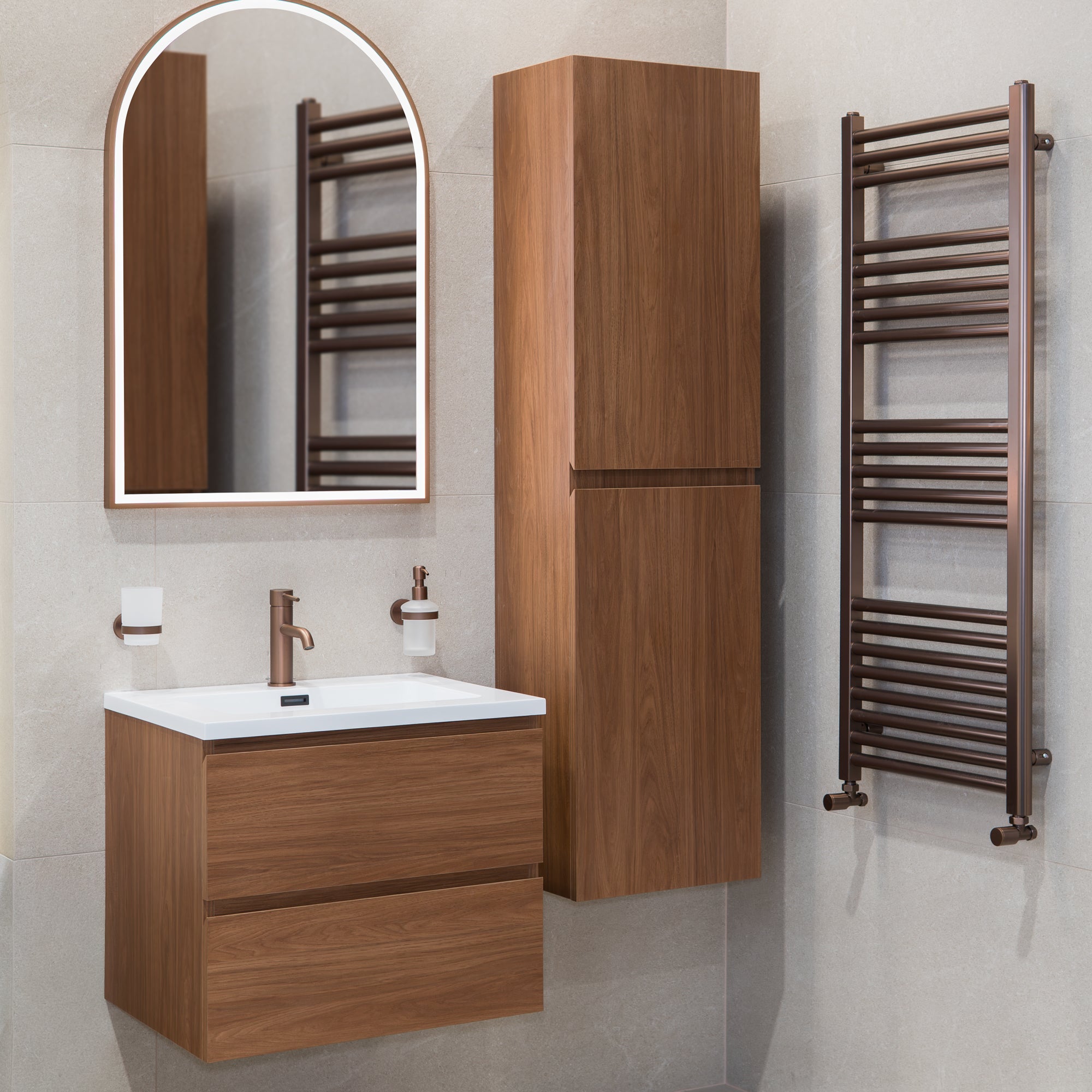
A wall-mounted electric heated towel rail suits most bathroom layouts and is available in a wide range of sizes and finishes.
Mounting options include:
- Vertical ladder rails for compact spaces.
- Wide rails for family bathrooms.
- Reversible wiring for left or right-side connections.
Finish options:
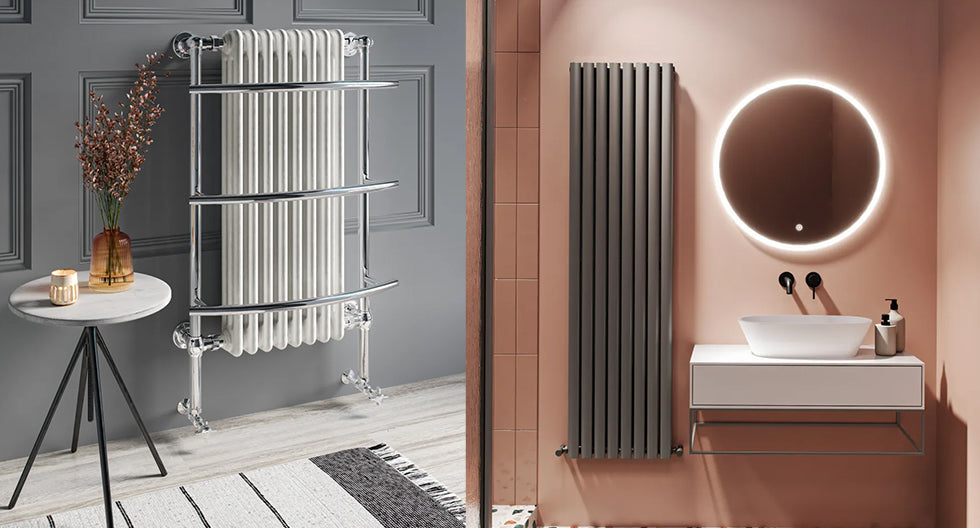
- Chrome for modern bathrooms.
- Matt black for contemporary designs.
- Stainless steel for corrosion resistance.
Focus on build quality over appearance. Poorly made rails lose heat faster and fail earlier.
How to Install a Heated Towel Rail?
Many homeowners ask how to install a heated towel rail, especially electric models.
Electric towel rails should be installed by a qualified electrician.
Key steps:
- Confirm IP rating for bathroom zones.
- Mount brackets securely into solid walls.
- Connect to fused spur or switched outlet.
- Test thermostat and timer functions.
Central heating towel rails require a heating engineer, particularly if pipework changes are needed. Incorrect installation is one of the most common causes of uneven heating and early failure.
Bleeding a Heated Towel Rail
Bleeding a heated towel rail applies only to central heating and dual fuel models. If parts of the rail remain cold, air is likely trapped inside the system. Electric-only towel rails do not need bleeding.
Signs it needs bleeding:
- Cold patches along the rail.
- Gurgling noises.
- Reduced heat output.
How to bleed it:
- Turn off heating.
- Use a bleed key on the valve.
- Release air until water flows steadily.
- Retighten and check pressure.
Running costs and energy efficiency
Electric towel rails are economical when used properly. Running costs stay low when the rail is used for short periods rather than left on continuously. Timers and thermostats help control energy use and prevent overheating.
Modern electric towel rails are designed to heat quickly and retain warmth, making them efficient for daily towel drying without high energy consumption.
Common Buying Mistakes to Avoid
- Choosing style over heat output.
- Ignoring bathroom zone safety ratings.
- Buying oversized rails for small spaces.
- Skipping professional installation.
Frequently Asked Questions
Do heated towel rails heat the whole bathroom?
A heated towel rail can heat small bathrooms. Larger rooms may need an additional heat source.
Can a heated towel rail be left on all day?
Yes, but timers and thermostats reduce energy use and extend lifespan.
How long does a heated towel rail take to warm up?
Electric models usually heat within 10 to 20 minutes.
Do electric towel rails need servicing?
No routine servicing is required, but electrical checks are advised after installation.
Why is my towel rail hot at the bottom and cold at the top?
This usually means trapped air. Bleeding the towel rail solves the issue.